
Introduction: Why Open Banking Matters Now
Open banking has moved from buzzword to baseline. If you manage money across a paycheck app, a high-yield savings account, and a credit card tracker, you have felt the pull of tools that connect your accounts and analyze your spending. Open banking lets you share your financial data securely with apps you choose, on terms you control. Done right, it can automate budgeting, surface savings you miss, and unlock better loan offers. Done poorly, it can expose more than you planned.
I have covered consumer finance through the rise of mobile payments, the 2020 stimulus era, and the post-2022 rate hikes. One theme keeps returning. People want clarity in a world of crowded dashboards. Open banking can deliver that clarity. It connects banks and apps using APIs, short for application programming interfaces, which are pipes that move specific data with your permission. The promise is choice and control. The risk is confusion about how that choice works.
In 2025, rates remain higher than the pre-2022 period, which raises the stakes. Higher yields make cash optimization more valuable. Credit card APRs run hot, so a simple mistake can cost more. This guide breaks down how open banking works, what to check before you connect, and the steps to keep your data safe while you get the benefits.
This article is for education only. It is not financial advice. Talk with a qualified professional about your situation.
What Open Banking Is and How It Works?
Simple definition
Open banking is a framework that lets you share your bank, credit card, and investment data with third-party apps using secure APIs instead of screen scraping. You decide what to share, for what purpose, and for how long.
Key players explained
- Data holders: Your bank, card issuer, credit union, or broker.
- Data access platforms: Aggregators that connect apps to your accounts through APIs.
- Third-party apps: Budgeting tools, savings apps, tax software, and lenders that use your data to provide services.
- You: The data owner with the right to grant and revoke consent.
Consent and tokens
When you connect an account inside an app, you approve specific permissions. That creates a token, which is like a revocable key. The app does not store your password. The token limits what data flows and for how long. Good apps let you set expiry windows and view exactly what you shared.
Benefits and Risks for New Investors
Real gains you can see
- Better budgeting: Apps categorize spending and flag trends. You can see subscriptions to cut within minutes.
- Smarter savings: High-yield offers change fast. Open banking can nudge you when a savings rate beats your current APY.
- Faster underwriting: Some lenders will price a loan using verified cash-flow data. That can lower your rate if your income is stable.
- Fewer errors: Secure API connections reduce broken links and duplicate transactions compared with screen scraping.
Consider Sarah, a 30-year-old teacher earning 50,000 dollars with a 4,000 dollar emergency fund and 3,200 dollars in credit card debt at 24 percent APR. She links two checking accounts and a card to a budgeting app through open banking. The app finds 68 dollars in unused subscriptions, nudges a 250 dollar auto-transfer to savings the day after payday, and suggests a 0 percent balance transfer for 12 months. She reduces interest costs and boosts cash without changing her paycheck.
Risks you must control
- Scope creep: Approving broad access when you only need balances.
- Long-lived tokens: Granting indefinite access, you forget to revoke.
- Data retention: Apps keep your data after you stop using them.
- Security lapses: Smaller apps with weak controls. Sources say most banks already support secure APIs in 2025, but coverage still varies by region.
The regulatory landscape in 2025
- The Consumer Financial Protection Bureau proposed a federal open banking rule in late 2023 under Section 1033 of Dodd-Frank and advanced the process in 2024. The rule aims to give consumers control over accessing and sharing their data, set standards for permissions, and curb screen scraping.
- The Federal Reserve has highlighted the growth of digital payments and the need for safe data flows. The Fed’s work on payment modernization sits alongside the push for secure data portability.
- International bodies like the Bank for International Settlements have flagged both the efficiency gains and the governance risks of data sharing, calling for clear consent, liability, and security norms.
How To Share Your Data Safely, Step by Step
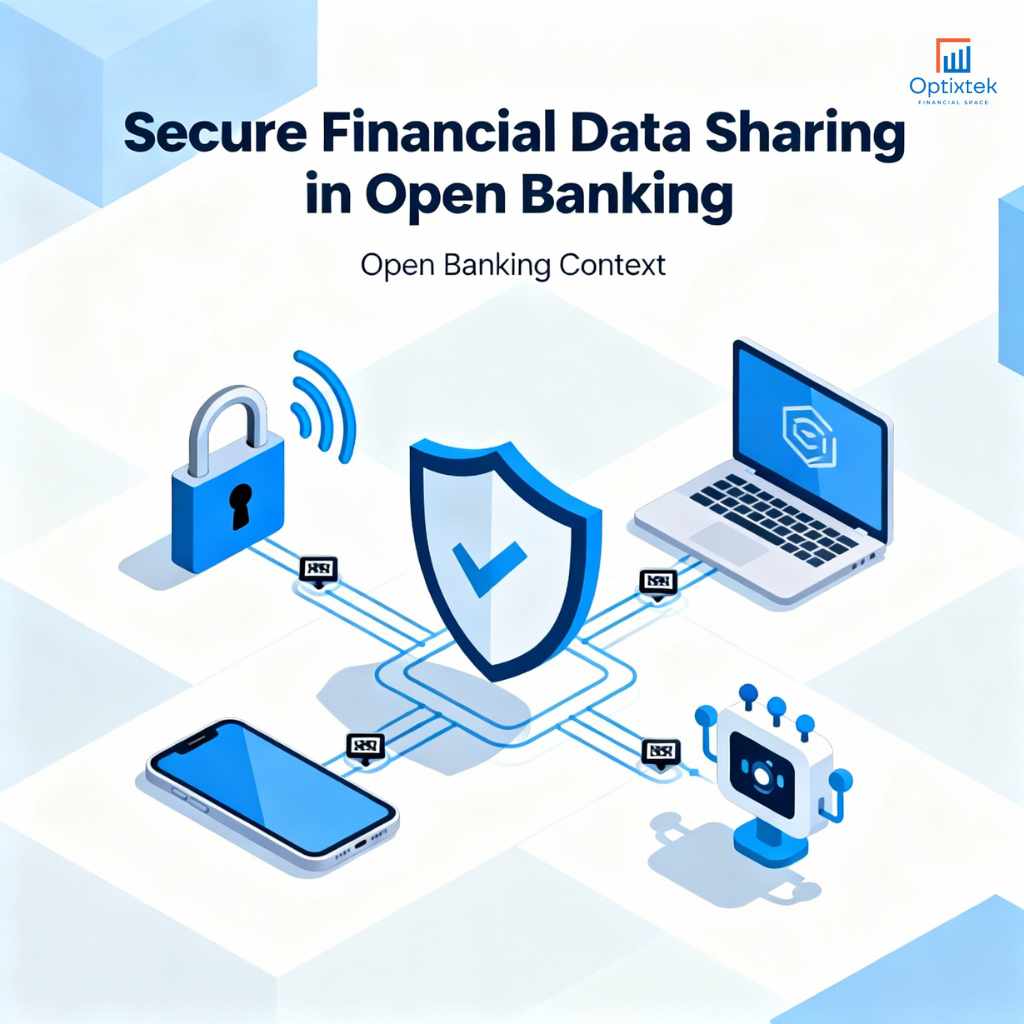
Step 1: Map what you need
Write your goal in one sentence. Example: I want a budgeting app to track all spending and alert me if I overspend the dining category by 10 percent.
List the minimum data needed. For budgeting, that is, read-only balances and transactions. You do not need money movement rights.
Step 2: Vet the app
Check permissions. Look for read-only access, permission granularity, and clear scopes.
Review security. Seek SOC 2 reports, encryption in transit and at rest, and strong bug bounty programs.
Read data retention policies. Your data should be deleted within a set window after you disconnect.
Confirm liability. See how the app handles unauthorized access and disputes.
Step 3: Connect the right way
Start inside the app’s secure flow. You should be redirected to your bank’s login screen or OAuth-style consent flow, not asked for your password directly.
Approve only what you need. Choose balances and transactions, not identity or payment initiation, unless you plan to use those features.
Set an expiry. Pick 90 days or less for most budget connections. Shorter windows reduce exposure.
Step 4: Monitor activity
Review the app’s data access dashboard monthly. Confirm last access time, data types shared, and expiry date.
Set alerts. Turn on notifications for new sign-ins and data pulls, where available.
Check your bank’s third-party access page. Revoke anything you do not recognize.
Step 5: Revoke and rotate
Disconnect when you stop using an app. Revoke access from both the app and your bank’s settings.
Rotate connections each year. Refresh tokens with a new consent window so you maintain control.
Case study: Sarah’s setup in practice
Sarah picks a reputable budgeting app that supports API banking for her two banks and cards. She grants read-only access to balances and transactions for 90 days. She enables monthly access reports and pushes alerts for new connections. After three months, she reviews progress. Dining spend fell by 12 percent, emergency savings rose to 5,300 dollars, and she cut interest by moving part of her balance to a lower-rate offer. She renews consent for another 90 days and declines the app’s optional credit offer to keep her focus on debt payoff.
Common Pitfalls, FAQs, and My Take
Avoid screen scraping when you can
Screen scraping uses your bank password and pulls raw page data. It breaks often and can expose more data than you intend. Prefer API-based connections with tokenized access.
What if your bank is not supported
If your bank lacks modern APIs, use manual CSV uploads for a few months while you shop for a bank that supports secure data sharing. Many regional banks now offer API banking through major aggregators.
Will open banking hurt my credit score
Viewing data does not affect your score. If an app requests a hard credit pull, you must authorize it, and that can impact your score temporarily. Read prompts carefully.
Can I move money through open banking
Yes, but treat payment initiation as a separate permission. Use it only with apps you trust. Keep it off by default for budgeting.
What happens if a bad actor gets in
Report unauthorized activity to your bank at once. Federal rules and bank policies often limit your liability if you report fast. Document the timeline and keep all messages. Then revoke the app’s access immediately.
How does this tie to rates in 2025
Higher yields reward people who move idle cash to better savings accounts. Open banking can surface rate changes faster, which matters when APYs shift. On the debt side, high APRs make every avoided fee worth more. In a higher-rate climate, better data can save real money.
Bottom Line and Next Steps
Open banking can make your financial life simpler and smarter. The gains are real when you narrow permissions, set short expiry windows, and check access logs. You get cleaner budgets, faster price checks on savings, and fairer credit decisions based on your actual cash flow. The threats are manageable if you limit the scope, avoid scraping, and revoke access when you are done.
Here is your next move. Pick one app that solves a single problem, like budgeting or savings rate tracking. Connect only the accounts you need with read-only access for 90 days. Turn on alerts and calendar a monthly review to confirm what was shared. If the app saves you money or time, renew consent. If not, disconnect and try a better fit. Small, controlled experiments beat all-or-nothing sharing.
This guide is education, not advice. If your situation is complex, bring a fiduciary planner into the loop. Your data has value. Treat permission as a tool, not a blank check.