

Introduction to Universal Banking
Universal banking is a comprehensive financial service model that offers a wide range of banking and related services under one roof. Unlike traditional banking, where services are often segmented, a universal banker is equipped to handle various aspects of financial management, from deposit accounts and loans to investment advice and wealth management. This approach provides a one-stop solution for customers, enabling them to access multiple services conveniently.
At the core of universal banking is the principle of modular banking services. This involves integrating different financial products and services into a cohesive offering that is tailored to meet the diverse needs of clients. The universal banker, therefore, embodies a versatile role, possessing the skills and knowledge to address a variety of financial queries and services. This adaptability distinguishes them from conventional bank tellers or relationship managers, who may specialize in a single area of banking.
The concept of universal banking has evolved significantly since its inception. Historically, banking institutions operated within strict confines, often specializing in either retail banking or investment banking. However, as the financial landscape has matured and customer expectations have changed, the shift towards universal banking has gained momentum. This change emphasizes a customer-centric approach, with innovative technology playing a critical role. Modern universal bankers leverage digital platforms to enhance customer engagement and service delivery, making banking more accessible and efficient.
In today’s fast-paced financial environment, understanding what is a universal banker is essential for both financial institutions and consumers. By providing integrated services, universal banks can build stronger relationships with their clients, fostering trust and long-term loyalty. This holistic approach is not just beneficial for the institutions themselves but is also pivotal in meeting the diverse and evolving needs of the modern consumer.
Understanding the Universal Banker Concept
Definition and Core Purpose
A universal banker is a multi-skilled financial professional trained to handle:
- Cash transactions.
- Customer account services.
- Sales of financial products.
- Digital banking support.
- Fraud awareness.
- Problem-solving.
Their goal is simple: provide a seamless, one-stop banking experience.
The Responsibilities and Skills of a Universal Banker
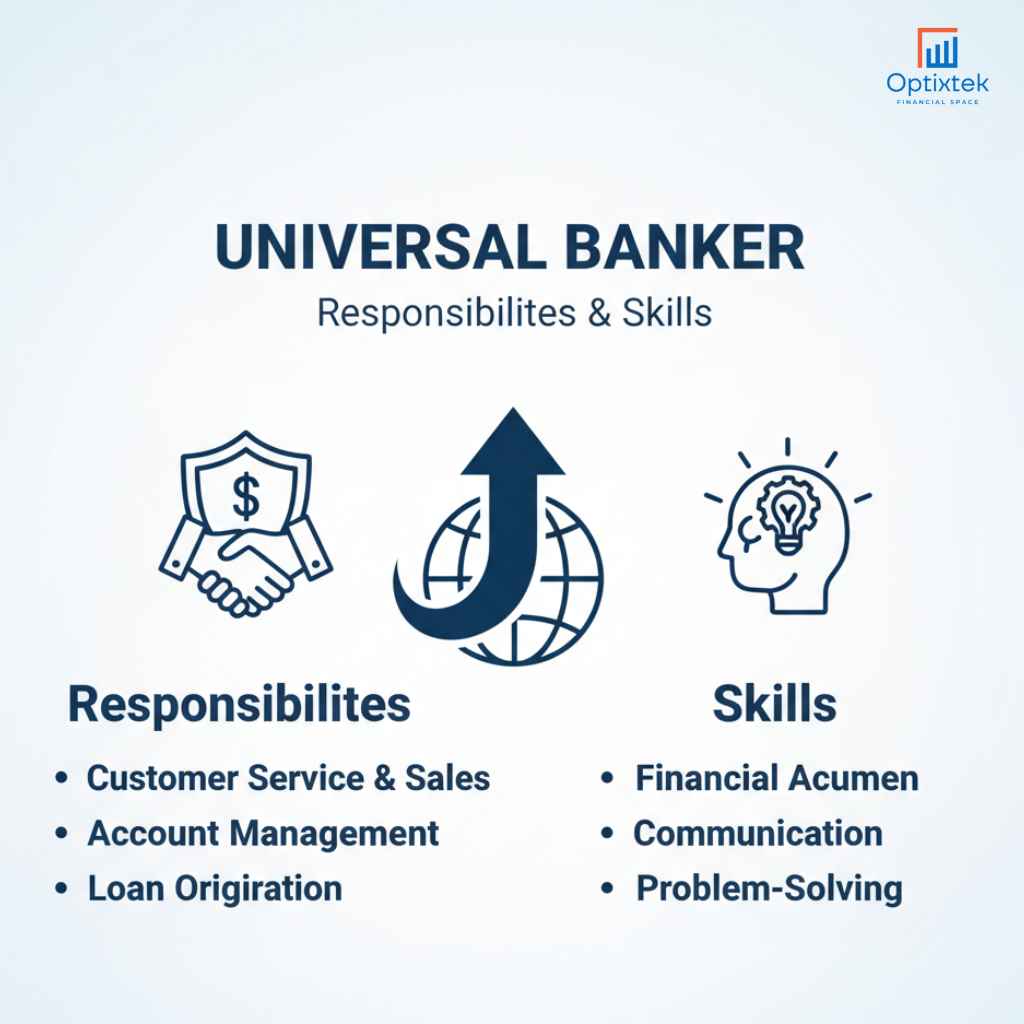
A universal banker operates at the intersection of conventional banking and comprehensive financial services, taking on a multitude of responsibilities that significantly enhance customer experience. One of the primary functions is conducting various financial transactions, such as deposits, withdrawals, and loan processing. This task requires precision and a thorough understanding of financial products, ensuring both compliance and customer satisfaction throughout the process.
Furthermore, universal bankers are tasked with providing personalized financial advice tailored to the individual needs of clients. By assessing their financial situations and goals, they can recommend appropriate banking products and services. For instance, a universal banker may guide a customer seeking to buy a home toward suitable mortgage options, enabling informed decision-making. This aspect of the role underscores the importance of effective communication skills, as the banker must articulate complex financial information in an easily understandable manner.
Cross-selling banking products is another integral responsibility of a universal banker. They leverage their comprehensive knowledge of the institution’s offerings to identify opportunities that may benefit customers. For example, if a customer opens a checking account, the banker might highlight additional services such as credit cards or investment accounts that align with the client’s financial goals. This not only enhances the customer’s banking experience but also contributes to the bank’s overall profitability.
Moreover, fostering strong customer relationships is crucial in this role. Universal bankers must engage actively with clients, responding to inquiries promptly and effectively to build trust and loyalty. A successful universal banker blends exceptional customer service orientation with analytical skills, allowing them to evaluate customer needs efficiently while navigating the complexities of financial regulations. Their ability to adapt to different customer scenarios is essential for maintaining a high level of service. These skills exemplify the multifaceted nature of what a universal banker is, ultimately enhancing the banking experience for all clients.
Benefits of Universal Banking for Customers and Institutions
Universal banking offers a myriad of advantages for both customers and financial institutions, creating a harmonious relationship that enhances the overall banking experience. For customers, one of the primary benefits of universal banking is the convenience of accessing a wide array of financial services under one roof. This consolidated approach eliminates the need to juggle multiple banking relationships, allowing individuals to manage everything from savings accounts to investment opportunities seamlessly. Such holistic access not only saves time but also streamlines personal finance management.
Furthermore, customers benefit from improved customer service. With universal bankers equipped to handle various financial needs, clients can receive more personalized assistance. This tailored approach fosters a deeper understanding of customer profiles, enabling bankers to recommend solutions that align more closely with individual financial objectives. Enhanced customer service can significantly boost satisfaction and loyalty, which are crucial in the competitive banking landscape.
On the institutional side, the advantages are equally compelling. Universal banking enables financial institutions to tap into new revenue streams through cross-selling services. By leveraging the comprehensive knowledge of customer profiles, banks can effectively introduce clients to other relevant products, enhancing overall profitability. Additionally, the model can contribute to increased customer loyalty, as a one-stop banking experience engenders a sense of trust and attachment to the institution.
Moreover, the flexibility inherent in universal banking allows for a more adaptive business model. Institutions can respond to changing market conditions and customer preferences with greater agility, ensuring they remain competitive and relevant. In conclusion, the universal banking model delivers substantial benefits for both customers and financial entities, fostering a dynamic ecosystem that meets diverse financial needs while promoting growth and customer engagement.
How the Role Differs from Traditional Bankers
Unlike traditional roles that are narrow in function, universal bankers:
- Perform teller duties.
- Assist with accounts.
- Educate customers about digital tools.
- Sell banking products.
- Offer personalized financial support.
They are the “Swiss Army Knife” of modern bank branches.
Education and Certifications for Universal Bankers
Minimum Educational Requirements
Most banks require at least a high school diploma, though many prefer an associate or bachelor’s degree in business or finance.
Recommended Certifications
Helpful certifications include:
- Certified Teller Professional (CTP).
- Customer Service Certification.
- Banking and Financial Services Diploma.
On-the-Job Training
Banks provide training on compliance, software, sales techniques, and fraud prevention.
The Future of Universal Banking
The landscape of the financial industry is undergoing significant changes, and universal banking stands at the forefront of this transformation. As technology continues to evolve, universal bankers find themselves adapting to a slew of advancements that have begun reshaping traditional banking paradigms. This evolution is crucial as customers increasingly expect seamless and personalized financial services that suit their individual needs.
One major trend influencing universal banking is the adoption of digital technologies. The rise of mobile banking applications and online financial services provides customers with greater convenience and accessibility. Universal bankers must leverage these technologies to enhance their service offerings, ensuring they remain competitive against fintech startups that specialize in niche financial solutions. Consequently, improving customer experiences through digital transformations is essential for the survival of universal banks.
Regulatory changes also play a pivotal role in shaping the future of universal banking. As regulations become more stringent, universal bankers will have to navigate a complex landscape while ensuring compliance and managing risk effectively. Banks that embrace a culture of adaptability will find opportunities to innovate in response to new regulations, potentially leading to the development of more robust financial products and services.
Moreover, consumer expectations are shifting towards a more holistic approach to financial services. Customers are increasingly seeking banking solutions that integrate various financial products rather than relying on segmented offerings. This trend presents an opportunity for universal bankers to position themselves as comprehensive providers, catering to a wide range of financial needs from lending to investment services.
As we look to the future, it is evident that universal banking will need to evolve continuously. By embracing technological advancements, adapting to regulatory frameworks, and understanding changing consumer behaviors, universal bankers can secure a sustainable and competitive position in this ever-changing financial environment. Through such adaptability, the future of universal banking appears promising, with opportunities for growth and increased customer loyalty.
Conclusion
Understanding What is The Role Of A Universal Banker? helps job seekers, students, and professionals see why this position is becoming the backbone of modern banking. Universal bankers make branches more efficient, customers happier, and financial services easier to access. With strong skills and training, this career opens doors to leadership and long-term growth.