

Overview of Digital Banking Architecture
The evolution of banking technology has fundamentally shifted the landscape of the financial sector over the past few decades. Traditional banking systems were characterized by physical branches, paper transactions, and lengthy processing times. In contrast, the modern paradigm emphasizes speed, efficiency, and convenience, primarily driven by digital banking architecture. This architecture comprises the frameworks, systems, and technologies that support a bank’s operations in a digital environment, enabling financial institutions to meet the needs of today’s tech-savvy consumers.
Digital banking architecture serves as the backbone of financial services, integrating various technologies such as cloud computing, big data analytics, application programming interfaces (APIs), and mobile banking solutions. Its significance stems from its ability to facilitate seamless interactions between banks and their customers by enhancing user experience and operational efficiency. For instance, with digital banking architecture, customers can access their accounts, execute transactions, and receive personalized services through various devices and platforms.
Moreover, this digital framework provides stakeholders with improved risk management and compliance capabilities. By leveraging advanced analytics and automation, financial institutions can better manage risk exposure and adhere to regulatory requirements. The shift to digital architecture also reflects a broader trend toward real-time banking, where transactions can occur instantaneously, significantly improving customer satisfaction. Compared to traditional banking models, digital architecture not only streamlines operations but also fosters innovation, enabling institutions to respond more swiftly to market demands and emerging technologies.
Understanding digital banking architecture is crucial for financial institutions aiming to thrive in a fast-paced, technologically advanced landscape. As the sector continues to evolve, mastering these foundational elements becomes essential for banks seeking to deliver exceptional service and maintain a competitive edge.
Key Components of Digital Banking Architecture
The digital banking architecture is a multifaceted construct that plays a pivotal role in enhancing the overall customer experience and operational efficiency within financial institutions. Several key components contribute to this architecture, each serving specific functions that interconnect to deliver seamless financial services.
One of the linchpins of digital banking architecture is the core banking system. This system is responsible for maintaining customer accounts, processing transactions, and ensuring the integrity of financial data. A robust core banking system allows for real-time updates and access, enabling banks to provide timely services to their customers.
Another critical element is customer relationship management (CRM) software. This component facilitates the tracking and management of customer interactions and relationships. CRM systems enable financial institutions to analyze customer data, tailor services, and enhance engagement, thereby building long-lasting relationships with clients.
Mobile and online banking platforms are also indispensable in the architecture. These platforms provide customers with the convenience of accessing financial services from anywhere at any time. With the growing reliance on smartphones and the internet, robust mobile banking applications and responsive online platforms have become essential for customer satisfaction and retention.
Data management systems underpin the entire structure of digital banking architecture, providing the capabilities needed for data storage, retrieval, and analysis. Effective data management is crucial for developing insights that inform strategic decisions, enhance risk management, and ensure compliance with regulatory requirements.
Lastly, cybersecurity measures are an urgent priority in digital banking. Given the increasing threats from cyber attacks, implementing advanced security protocols is vital to protect sensitive customer data and maintain the trust of the clientele. Cybersecurity must be an integral part of the digital banking architecture to mitigate risks and respond promptly to potential breaches.
Each of these components functions harmoniously within the digital banking architecture, contributing to efficient service delivery and a secure customer experience in an ever-evolving financial landscape.
Challenges in Implementing Digital Banking Architecture
The shift towards a fully digital banking architecture presents various challenges that financial institutions must navigate to remain competitive in the modern landscape. One of the foremost obstacles is the integration of legacy systems. Many financial organizations have relied on traditional systems over the years, which can be complex and outdated. Integrating these with new digital platforms often requires significant investments in time and resources, including specialized personnel and training. This integration process is critical to ensure that there is seamless communication between existing systems and new digital solutions.
Another considerable challenge is the issue of data privacy. With the rise of digital transactions, financial institutions are now tasked with protecting a vast amount of sensitive information. Ensuring robust security measures are in place is paramount to prevent data breaches, which can lead to severe reputational damage and financial loss. Adopting a comprehensive digital banking architecture that prioritizes cybersecurity is essential. Institutions must invest in advanced security technologies and training to ensure that all employees understand the importance of data protection.
Regulatory compliance adds another layer of complexity to implementing digital banking architecture. Financial institutions are subject to a multitude of regulations that can vary by jurisdiction. Compliance with these regulations is critical and can often be challenging due to the constant evolution of laws surrounding digital transactions and data management. Institutions must continuously update their systems to align with legal requirements, which can lead to continuous operational strain.
Lastly, the need for continuous innovation is a driving force behind the successful implementation of digital banking architecture. As customer expectations evolve, financial institutions must remain agile, adapting their systems and offerings accordingly. This often requires a cultural shift within the organization and a commitment to ongoing investment in technology and talent. The ability to balance these challenges while progressing toward a comprehensive digital framework will determine the success of an institution in today’s digital banking landscape.
The Future of Digital Banking Architecture
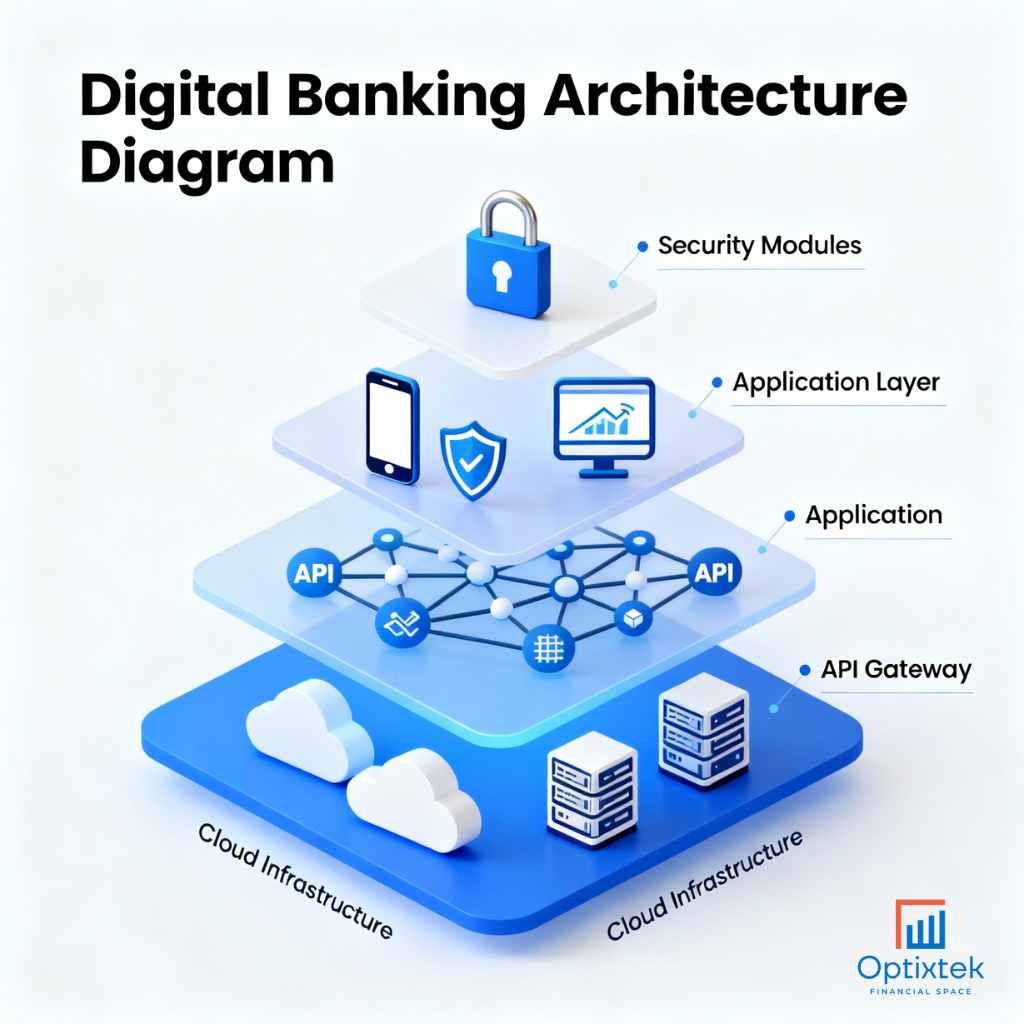
As financial institutions navigate the complexities of the modern marketplace, the future of digital banking architecture appears increasingly dynamic and innovative. Emerging trends and technologies are set to redefine the way banks operate, enhancing both customer experiences and operational efficiencies. One of the most significant trends is the integration of artificial intelligence (AI) into banking systems. AI-driven solutions can streamline processes, such as customer service through chatbots, personalized financial advice, and enhanced fraud detection mechanisms, thereby promoting a more responsive and secure banking environment.
Another transformative concept is the open banking paradigm, which fosters collaboration between banks and third-party service providers. This approach not only allows for the sharing of customer data (with their consent) but also enriches the range of services offered. By leveraging APIs (Application Programming Interfaces), banks can offer innovative financial products and services, thereby elevating customer engagement and satisfaction while expanding their operational capabilities. Furthermore, as regulations surrounding open banking continue to evolve, banks are encouraged to adopt more flexible digital banking architecture to stay competitive.
Additionally, cloud computing adoption plays a crucial role in shaping the future landscape of digital banking architecture. By migrating to cloud-based solutions, financial institutions can achieve greater scalability, cost-effectiveness, and data security. This technological shift allows banks to easily adapt to changing market demands while maintaining a robust infrastructure with the agility needed to innovate quickly. Moreover, the increasing prevalence of partnerships with fintech companies is likely to redefine traditional banking models, facilitating the introduction of cutting-edge solutions that resonate with tech-savvy consumers.
In conclusion, the future of digital banking architecture will be characterized by the integration of AI, the embrace of open banking, cloud computing, and strategic fintech partnerships. These advancements have the potential to vastly improve how financial institutions operate, ultimately leading to enriched customer interactions and sustained competitive advantage.