
Understanding the FIRE Movement
The FIRE movement, an acronym for Financial Independence, Retire Early, has gained considerable traction in recent years, inspiring individuals to rethink traditional retirement norms. The origins of this movement can be traced back to various personal finance books and blogs, most notably the “Your Money or Your Life” book published in the early 1990s.
The foundational principle of the FIRE investment strategy revolves around the idea that by aggressively saving and investing a significant portion of one’s income, individuals can achieve financial independence at an early age and retire much sooner than the conventional retirement age.
Core concepts within the FIRE movement emphasize frugality, which is the practice of being mindful of expenditures and prioritizing savings over luxury. Adherents of this lifestyle often adopt extensive budgeting techniques that favor minimalism and an efficient, purpose-driven life. By consciously deciding to reduce unnecessary spending, FIRE practitioners can redirect those funds toward investments, thereby maximizing their savings rates and accelerating their journey toward financial independence.
The FIRE investment strategy isn’t just a buzzword; it’s a roadmap to ditching the 9-to-5 rat race by aggressively saving and investing until your assets generate enough passive income to cover your life. Popularized among millennials and Gen Xers, it aims for retirement in your 40s or 50s, far ahead of the traditional 65.
At its core, FIRE revolves around a high savings rate, often 50-70% of your income, funneled into diversified investments like index funds, real estate, or dividend stocks. The goal? Hit your “FIRE number,” typically 25-30 times your annual expenses, so you can safely withdraw 4% yearly without depleting your nest egg.
What draws people in, including me during my early consulting days, is the empowerment: no more trading time for money, just freedom to travel, create, or simply relax. But it’s not for everyone; success demands discipline and a willingness to live lean.
Components of the FIRE Investment Strategy
The FIRE (Financial Independence, Retire Early) investment strategy emphasizes careful planning and informed decisions to accumulate wealth efficiently. A foundational element of this approach is asset allocation, which involves distributing investments across various asset classes such as equities, fixed income, and alternative investments. By balancing the proportion of each asset class, investors can manage risk while aiming for an optimal return. A well-diversified portfolio reduces the impact of poor performance from any single asset and is crucial for long-term success.
Moreover, low-cost index funds play a significant role in the FIRE investment strategy. These funds often track a specific market index and provide broad market exposure without the high fees associated with actively managed funds. By choosing index funds, investors can avoid excessive costs, which can erode potential returns over time. The simplicity and efficiency of these investment vehicles align well with the objectives of the FIRE approach, allowing individuals to maximize growth while minimizing expenses.
Diversification is another key aspect of a successful FIRE investment strategy. This principle involves spreading investments across different sectors and asset classes. Stocks, bonds, and real estate each carry unique risk and return characteristics. By diversifying, investors can mitigate risks that come from market volatility, economic downturns, or sector-specific declines. However, pursuing high returns can come with inherent risks; thus, it is essential to evaluate potential volatility and make informed decisions about the level of risk one is willing to accept.
Understanding these fundamental components, the effective asset allocation, the use of low-cost index funds, and the importance of diversification equips individuals with the knowledge needed to navigate the complex landscape of investments. By applying these principles, aspiring adherents of the FIRE methodology can work towards achieving financial freedom and an early retirement.
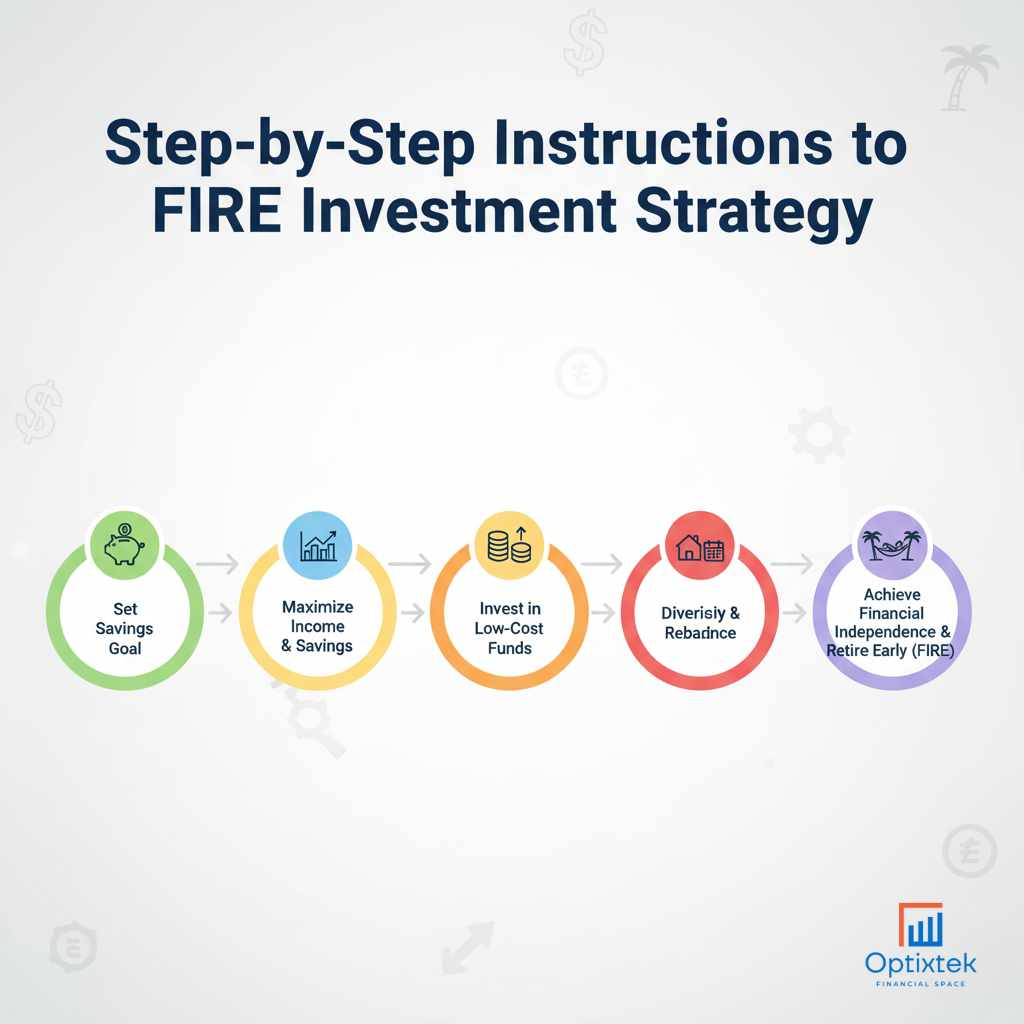
Step-by-Step Instructions to Achieve FIRE
Understanding Your Financial Goals
Before implementing a fire investment strategy, it is crucial to identify and understand your financial objectives. Establishing clear financial goals allows investors to tailor their investment decisions to meet specific outcomes, leading to a more focused and effective approach. Begin by differentiating between short-term and long-term goals. Short-term goals may include saving for a vacation or building an emergency fund, while long-term goals often encompass retirement planning, purchasing a home, or establishing a fund for education.
Once you have outlined your goals, the next step is to assess your risk tolerance. Understanding your comfort level with risk can significantly influence your investment choices. Factors such as age, income stability, and financial obligations may affect how much risk you are willing to take. For instance, younger investors may have a higher risk appetite as they have more time to recover from market downturns, whereas those nearing retirement might prefer conservative strategies to protect their capital.
Moreover, having a clear vision of your financial future is essential as it informs your investment strategy. This vision should encompass not only the desired outcomes but also the values and lifestyle you aspire to maintain. Creating a personal financial roadmap aids in aligning your investments with both your goals and your risk tolerance. This roadmap should include actionable steps that outline how to allocate resources efficiently, encouraging disciplined savings and investments over time.
Ultimately, understanding your financial goals serves as the foundation for a successful fire investment strategy. By carefully considering your objectives and creating a well-structured plan, you position yourself for better financial outcomes and increased confidence in your investment journey.
Researching Investment Options
Conducting thorough research on various investment vehicles is a crucial step in establishing a successful fire investment strategy. It is essential to explore different asset classes, including stocks, bonds, mutual funds, and real estate, to understand which options align with your financial goals. Each class presents distinct characteristics, risks, and potential returns that must be analyzed carefully.
Begin by gathering information on the performance of various investments over time. Historical data can provide insights into trends, volatility, and overall market conditions. For stocks, review metrics such as earnings per share (EPS), price-to-earnings (P/E) ratios, and dividend yields. Understanding these factors enables investors to gauge the firm’s health and make informed decisions. For bonds, consider interest rates, credit ratings, and maturity dates to evaluate risk versus return.
Equally important is the analysis of mutual funds and exchange-traded funds (ETFs). Investigate the fund’s performance history, management fees, and overall strategy. This due diligence will aid in identifying funds that have historically delivered attractive returns with a risk profile that aligns with your investment philosophy.
Real estate investment requires a different approach; analyze local market conditions, property values, and rental yields. Economic indicators such as employment rates and demographic trends should also be considered. Additionally, understanding the significance of diversification is paramount. By spreading investments across various asset classes, you minimize risks and enhance the potential for expansive returns.
To access reliable financial information, utilize reputable sources such as financial news websites, investment research platforms, and government statistics. By effectively incorporating these factors into your research, you can build a solid fire investment strategy that caters to your financial goals while addressing potential risks associated with various investment options.
Developing and Implementing an Investment Plan
Creating a structured investment plan is a crucial step in enhancing your fire investment strategy. The first aspect to consider is the allocation of funds among various asset classes, which typically include stocks, bonds, mutual funds, real estate, and other investment opportunities. A diversified portfolio mitigates risk and leverages the potential for returns by spreading investments across different sectors. It is vital to assess your risk tolerance, investment goals, and timeline before determining how much capital to allocate to each asset class.
Setting a clear investment timeline plays an essential role in your fire investment strategy. Establishing short-term and long-term investment goals helps clarify your intent and allows you to design an appropriate strategy. For example, if you aim for significant capital growth, a long-term strategy may favor stocks. Conversely, if you’re seeking stability and income, allocating funds into bonds might be more favorable.
Defining clear metrics for measuring success is also paramount. This could involve tracking portfolio performance against a benchmark index, assessing dividend income, or noting capital appreciation over specific periods. Regularly reviewing these metrics will help you understand the effectiveness of your investment strategy and identify any adjustments necessary based on performance.
Beginning with smaller investments and gradually increasing the amount as you gain confidence can alleviate pressure as you engage with the market. This incremental approach allows you to fine-tune your strategy while adjusting to market fluctuations and personal circumstances. Sticking to your investment plan during volatile times is crucial; maintaining discipline can prevent emotionally driven decisions that might jeopardize your financial objectives.
By following these strategic methods when developing and implementing your investment plan, you can ensure a solid foundation for your fire investment strategy, paving the way for long-term financial success.
Monitoring and Adjusting Your Strategy
Monitoring and adjusting your fire investment strategy is pivotal in ensuring your investments align with your long-term financial goals. This continuous assessment allows investors to track their portfolio’s performance against relevant market benchmarks, helping identify the strengths and weaknesses of their investment choices. Regular reviews facilitate timely strategic adjustments, which can mitigate losses during unfavorable market conditions and capitalize on growth opportunities when they arise.
It is essential to establish clear performance indicators. An investor should compare their portfolio’s returns with appropriate benchmarks, such as the S&P 500, to evaluate if their investment strategy is underperforming or exceeding expectations. This process involves scrutinizing the performance of individual assets, sector allocations, and overall portfolio diversification. When performance lags behind these benchmarks consistently, it may signal the need for reevaluation of investment options.
Indicators for buying or selling investments often stem from both quantitative and qualitative factors. Market trends, economic indicators, and company performance can provide insights into potential shifts. Additionally, the necessity for rebalancing arises as individual investments will grow disproportionately over time. This realignment process is crucial; it entails selling off excess gains in outperforming assets and redistributing funds into underperforming ones, ultimately maintaining the desired risk tolerance and investment strategy balance.
The psychological aspects of investing also warrant attention, as emotional decision-making can jeopardize even the most carefully planned fire investment strategy. Investors are advised to cultivate a disciplined approach, establishing predefined rules for entry and exit points based on data rather than emotions. Keeping a level-headed perspective during market fluctuations not only helps in maintaining a rational investment course but also encourages adherence to an effective long-term strategy.
Creating Your Personal FIRE Plan
Developing a personalized FIRE (Financial Independence, Retire Early) plan is essential for anyone interested in pursuing a FIRE investment strategy. The first step in creating this plan involves setting realistic savings targets that align with your financial goals. Understanding how much you need to save each month is crucial, as this will dictate your future spending habits and lifestyle adjustments. Start by evaluating your current income and expenses, and determine how much of your income can be allocated towards your savings and investments.
Next, calculate your net worth. This involves listing all your assets, including savings, investments, and property, while also accounting for liabilities such as loans and credit card debt. A clear picture of your net worth will help you identify the gap between where you currently stand and where you need to be for financial independence. Additionally, estimating your future expenses is paramount; consider factors like housing, healthcare, and lifestyle choices that could impact your spending habits in retirement.
Practical steps are vital in executing a fire investment strategy effectively. Budgeting is one of the most useful tools at your disposal. By tracking your expenses, you can identify areas where you can cut back and increase your savings rate. Furthermore, diversifying income sources can significantly accelerate your FIRE journey. Consider engaging in side hustles or establishing passive income streams, such as rental properties or dividend-generating investments, to supplement your primary income. These efforts will not only enhance your financial standing but also make your FIRE plan more robust.
In summary, crafting your personal fire investment strategy requires a thoughtful approach to savings, budgeting, and income generation. By following these steps, you can tailor a plan that suits your unique financial situation and goals, paving the way towards financial independence.
Maintaining Motivation and Overcoming Challenges
Embarking on the journey of a fire investment strategy requires not only financial discipline but also psychological resilience. Maintaining motivation throughout this process can be challenging, as it often involves significant lifestyle changes and sacrifices. One effective approach to sustaining motivation is to set clear and achievable milestones. Breaking down long-term financial goals into smaller, manageable tasks can provide a sense of accomplishment and help maintain focus. Celebrating these small victories can offer encouragement, reinforcing the commitment to the overall fire investment strategy.
Another crucial aspect is finding a balance between frugality and the enjoyment of life. While it is essential to curtail unnecessary expenses in the pursuit of financial independence, it’s equally important to incorporate meaningful experiences into one’s life. Allocating a specific budget for activities that bring joy can prevent feelings of deprivation and burnout, which are common pitfalls among those committed to a fire investment strategy.
Building a supportive community can also play a pivotal role in maintaining motivation. Engaging with like-minded individuals through forums, social media groups, or local meet-ups can provide encouragement and accountability. Sharing experiences and strategies helps individuals stay informed about common challenges faced on the FIRE path, such as lifestyle inflation, investment volatility, and unexpected expenses. Understanding that these are shared experiences can reduce feelings of isolation and anxiety.
Addressing challenges proactively is essential for staying on track. For instance, to combat lifestyle inflation, individuals should consistently review their spending habits, prioritizing needs over wants. When faced with market fluctuations or financial emergencies, developing an emergency fund can provide a safety net and peace of mind. By employing these strategies, individuals can remain focused on their financial goals and navigate the complexities of the fire investment strategy with greater confidence.