

Introduction to Peter Lynch
Peter Lynch is widely recognized as one of the most successful investors in modern financial history. His illustrious career is prominently marked by his tenure as the manager of the Fidelity Magellan Fund from 1977 to 1990. During this period, Lynch achieved remarkable performance, with the fund’s assets growing from approximately $18 million to an astounding $14 billion. This exceptional track record earned him a reputation among both investment professionals and individual investors alike, solidifying his status in the realm of investment strategy.
Lynch’s investment philosophy is rooted in a profound understanding of the companies in which he invested. He famously advocated for the concept of “investing in what you know.” This principle encourages investors to leverage their personal experiences and knowledge base when selecting stocks, often leading to more informed decision-making. By focusing on companies with strong fundamentals and promising growth potential, Lynch has exemplified how thorough research and patience can yield substantial returns over time.
In this guide, we’ll break it down step by step, just like prepping your favorite recipe, so you can build a portfolio that grows steadily.
Understanding Lynch’s Investment Philosophy
Peter Lynch, a renowned investor and former manager of the Magellan Fund at Fidelity Investments, developed a distinctive investment philosophy that remains influential to this day. At the heart of Lynch’s investment strategy is the principle of investing in what you know. This approach encourages investors to leverage their everyday knowledge and experiences to uncover potential investment opportunities. By focusing on industries and companies familiar to them, investors can often identify promising stocks before the broader market acknowledges their value.
Another cornerstone of Lynch’s investment strategy is rigorous research. Lynch believed that thorough analysis is crucial for identifying undervalued stocks, providing an edge over competitors. He advocated for investors to analyze a company’s fundamentals, including its earnings, revenue growth, and competitive advantages, to determine its long-term potential. By placing emphasis on fundamental analysis, Lynch equipped himself with the tools necessary for making informed investment decisions.
Lynch also introduced the concept of “buying what you understand,” which underscored the importance of aligning investments with an individual’s insights into a particular sector. This principle not only helps investors maintain confidence in their portfolio but also allows them to react effectively to market fluctuations. When investors are knowledgeable about a business or its products, they are more likely to stay invested during downturns, demonstrating resilience grounded in their understanding.
Moreover, Lynch emphasized the importance of patience in the investment process. Success does not typically occur overnight; therefore, investors must exhibit discipline and focus on long-term growth potential rather than short-term market movements. By adhering to such principles, Lynch was able to achieve remarkable returns, making his investment philosophy an enduring topic of study for aspiring investors. Ultimately, Lynch’s investment strategy serves as a reminder of the value of sound research and the benefits of investing within one’s circle of competence.
The ‘Invest in What You Know’ Principle
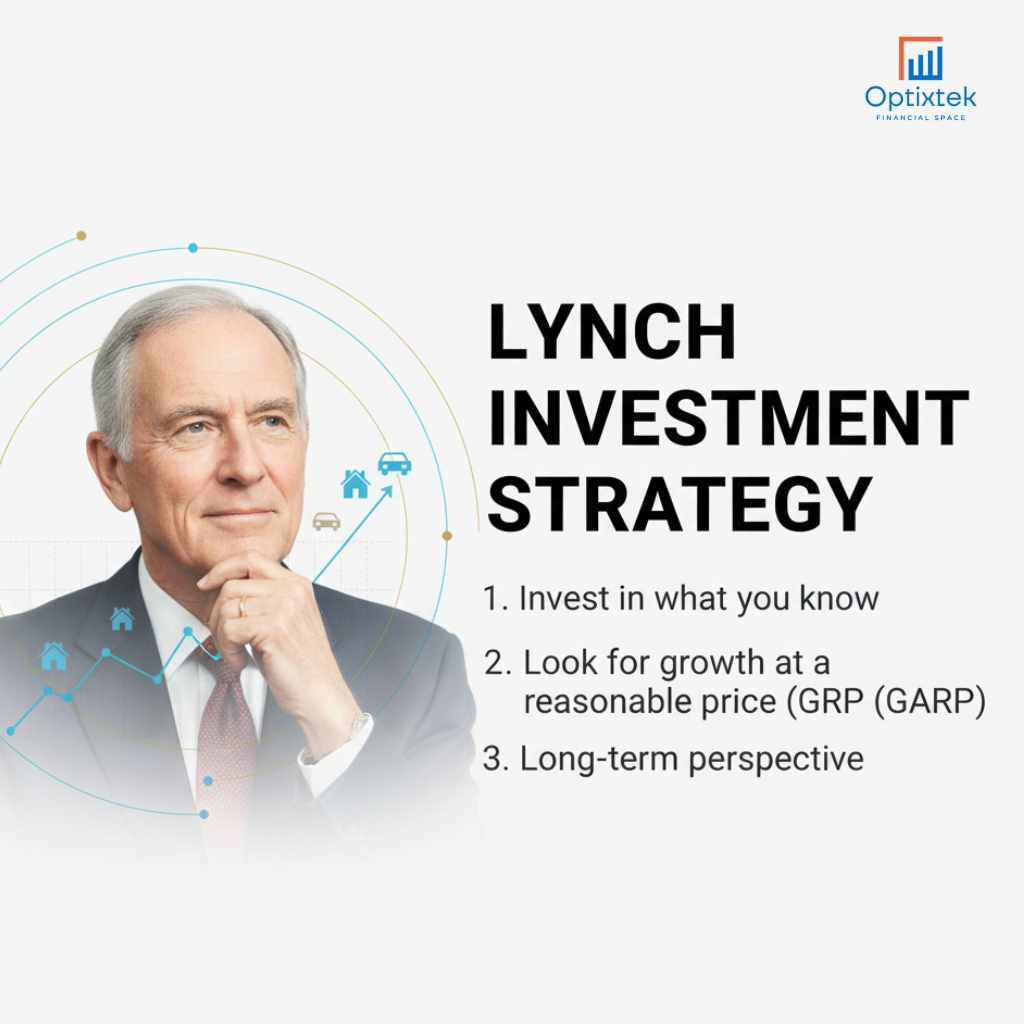
One of the cornerstone philosophies of the Peter Lynch investment strategy is encapsulated in the phrase “Invest in what you know.” This principle posits that investors can achieve greater success by leveraging their personal knowledge and experiences to inform their investment decisions. By focusing on industries, sectors, or products they are familiar with, investors can identify opportunities that may not be immediately apparent to others. This localized expertise enables one to evaluate companies more thoroughly, considering not only their financial health but also their growth potential and market positioning.
Lynch’s approach encourages individuals to look at their everyday experiences as a means to uncover investment chances. For instance, if an investor frequently uses a specific product or is part of a service that they believe offers exceptional value, there may be an opportunity to delve deeper. By understanding the nuances of that sector, one can gain insights into market trends and consumer preferences that could inform a compelling investment thesis. This intrinsic knowledge can serve as a significant competitive advantage, particularly in identifying underappreciated or misunderstood companies.
Moreover, the ‘Invest in What You Know’ principle advocates for a level of confidence among investors, promoting the idea that familiarity breeds comfort. When individuals can relate to a business model or understand a product’s value proposition based on personal experience, they are more likely to stay committed during market fluctuations. This emotional connection often leads to informed and rational decision-making, aligning with the long-term objectives of the Peter Lynch investment strategy.
In essence, by applying this principle, investors can better filter out noise from the market and focus on opportunities that are supported by their unique insights and knowledge base. This focused approach not only aligns with Lynch’s successful investment philosophy but also reinforces the importance of personal engagement in the investing process.
The Magic of Pink Sheets and Small Caps
Peter Lynch, renowned for his insightful investment strategies, emphasizes the significance of small-cap and lesser-known companies in his investment philosophy. His investment approach leverages the potential that lies within these often-overlooked stocks, making them a critical component of the Lynch investment strategy. Small-cap stocks are characterized by their lower market capitalizations and typically exhibit higher growth potential compared to their larger counterparts. This growth potential can stem from various factors, such as innovative products, niche markets, or superior management practices.
Investors like Lynch recognize that small-cap stocks often trade at lower valuations relative to their earnings, presenting a unique opportunity for substantial returns. The rationale behind this investment tactic is rooted in the market’s inefficiencies when it comes to analyzing companies on the Pink Sheets. These companies frequently lack the attention of institutional investors, which can result in undervaluation. By identifying such companies early on, investors can position themselves for significant gains as the market recognizes their true value over time.
To effectively research these small-cap opportunities, Lynch advocates for thorough analysis combined with an understanding of the business model. Investors should focus on examining a company’s fundamentals, growth prospects, and overall market conditions. Utilizing financial metrics such as price-to-earnings ratios or revenue growth can provide valuable insights into a stock’s potential. Additionally, engaging in qualitative assessments, such as analyzing management effectiveness and industry trends, can further inform investment decisions.
Incorporating these methodologies into one’s investment strategy allows individuals to successfully navigate the complexities of small-cap and pink sheet investing. Ultimately, Lynch’s focus on uncovering hidden gems in the stock market underscores the effectiveness of his investment strategy, allowing investors to capitalize on opportunities that are frequently overlooked by mainstream analysts.
Using the PEG Ratio in Investment Decisions
The PEG (Price/Earnings to Growth) ratio is a fundamental metric that Peter Lynch incorporated into his investment strategy to assess the valuation of stocks in relation to their earnings growth potential. By integrating both the P/E (Price to Earnings) ratio and the expected growth rate of a company’s earnings, the PEG ratio provides a more nuanced perspective than traditional valuation methods. The formula for calculating the PEG ratio is straightforward: divide the P/E ratio of a company by its projected earnings growth rate. For instance, if a company has a P/E ratio of 20 and a growth rate of 10%, the PEG ratio would be calculated as 20/10, resulting in a PEG of 2.0.
Investors utilize the PEG ratio to evaluate whether a stock is overvalued or undervalued. A PEG ratio of 1 is often considered ideal, suggesting that the stock’s price accurately reflects its forecasted growth. Conversely, a PEG below 1 can indicate that a stock is undervalued relative to its growth potential, making it an attractive investment opportunity. Lynch advocated for this metric as it considers the growth aspect, which is crucial for long-term investment success. By utilizing the PEG ratio, investors can explore stocks that might be overlooked by those relying solely on traditional metrics.
Moreover, Peter Lynch’s preference for the PEG ratio stemmed from its ability to factor in growth possibilities in conjunction with current earnings, something that simple P/E ratios do not fully capture. By focusing on stocks with favorable PEG ratios, investors can identify companies that exhibit solid fundamentals yet remain attractively priced compared to their growth trajectories. This strategic approach enables investors to make informed decisions, maximizing the potential for substantial returns in alignment with Lynch’s investment philosophy.
Finding Growth Stocks: The Lynch Way
One of the hallmarks of the Peter Lynch investment strategy is the focus on identifying growth stocks—companies that exhibit the potential for significant earnings expansion and revenue increase over time. Lynch emphasized that investing in growth stocks requires a systematic approach to analyze key indicators that reveal a company’s future potential. A primary characteristic to consider is revenue growth; Lynch encouraged investors to look for companies that regularly report increasing revenues across consecutive quarters. A consistent upward trend in sales can often indicate a strong market demand for the company’s products or services.
In addition to evaluating revenue figures, earnings trends are equally critical in identifying promising growth stocks. Investors should assess a company’s earnings per share (EPS) and net income growth, as these metrics provide insight into the company’s profitability and efficiency. Lynch highlighted the importance of sustainable earnings growth, suggesting that companies should show the ability to grow earnings over extended periods rather than exhibiting sporadic spikes. This consistent performance can reveal sound management practices and competitive advantages within the industry.
Another crucial element in Lynch’s investment philosophy is to evaluate future industry potential. Investors are encouraged to conduct thorough research on the industry in which the company operates, looking for trends that could foster future growth. Companies in burgeoning fields, such as technology, healthcare, or renewable energy, may present attractive opportunities for investors seeking growth stocks. Lynch was known for advocating a deep understanding of industries and companies, thereby enabling investors to make informed decisions based on market dynamics.
By paying close attention to revenue growth, earnings trends, and future industry potential, investors can emulate the successful strategies employed by Lynch in identifying growth stocks. The application of these principles forms a foundational pillar of the Peter Lynch investment strategy and can lead to prosperous investment outcomes when executed effectively.
Diversification vs. Concentration in Lynch’s Portfolio
In the realm of investing, the concepts of diversification and concentration are often debated among financial experts. Peter Lynch, a highly regarded investor and former manager of the Magellan Fund at Fidelity Investments, advocated for a balanced approach, emphasizing a concentrated portfolio while managing risk effectively. Lynch believed that investors should focus on quality stocks in which they possess a profound understanding, rather than spreading their investments too thinly across numerous companies.
The lynchpin of Lynch’s investment strategy is selecting a limited number of stocks that offer significant potential for growth. Generally, Lynch recommended holding between 15 to 20 stocks within a portfolio. This number allows for a manageable level of diversification while encouraging investors to become well-acquainted with the companies they are investing in. By concentrating on fewer holdings, investors can dedicate their analytical efforts to understanding the intricacies of each business, including its competitive position, financial health, and industry trends.
While diversification is crucial for mitigating risk, Lynch argued that excessive diversification can lead to diminishing returns and a lack of focus. He illustrated this through the idea that owning 50 or more stocks can dilute one’s exposure to the most promising investments. Instead, Lynch’s investment strategy promoted the notion that a focused portfolio could yield superior results, provided that the investor conducts exhaustive research and maintains a disciplined approach toward buying and holding. By ensuring that each stock in the portfolio holds merit and aligns with their investment philosophy, investors can successfully balance the principle of concentration with suitable risk management practices.
Ultimately, Lynch’s methodology presents a compelling case for blending concentration with calculated risk management, allowing investors to harness the potential for substantial returns while preserving the integrity of their portfolios.
Lessons from Lynch: Common Mistakes and Pitfalls
Peter Lynch, one of the most celebrated investors of our time, has consistently emphasized the importance of avoiding common pitfalls in investing. One of the primary mistakes that Lynch warns against is emotional trading. Investors often let their emotions dictate their decisions, leading to impulsive buys and sells based on market fluctuations rather than a company’s underlying fundamentals. This approach frequently results in missed opportunities and losses, as emotional responses can cloud judgment and lead to hasty decisions. Bear in mind that a calm and rational mindset is essential for long-term success.
Another critical error highlighted by Lynch is poor research. Many investors jump into stocks without conducting thorough analysis or possessing adequate knowledge of the companies they are investing in. Lynch advocates for a deep understanding of a company’s business model, management team, and competitive positioning within the market. This due diligence is crucial for making informed decisions and identifying genuine investment opportunities. Failure to thoroughly research can create an illusion of security, which may ultimately result in unwise financial commitments and unexpected losses.
Furthermore, neglecting fundamentals is a frequent mistake among investors. Lynch stresses the significance of understanding key financial indicators such as earnings growth, debt levels, and price-to-earnings ratios. Ignoring these foundational elements can lead to investing in overpriced stocks without realizing the underlying risks associated with them. Adopting Lynch’s mindset encourages modern investors to prioritize a company’s financial health and long-term prospects rather than chasing short-term gains. By steering clear of these pitfalls, investors can better align themselves with the successful principles inherent in the Peter Lynch investment strategy, ultimately fostering a more disciplined and successful investment approach.
Applying Lynch’s Strategies Today
Peter Lynch’s investment strategy, renowned for its simplicity and effectiveness, remains relevant in today’s fast-evolving financial landscape. Investors can apply his principles by adapting to notable shifts in technology, investment vehicles, and emerging market opportunities. One of Lynch’s essential tenets is the belief in investing in what you know. Today, this can be further expanded through the lens of personal experience with new technologies, such as artificial intelligence or renewable energy. By leveraging insights gained from daily life, investors can identify promising businesses that are not only financially sound but also integral to their own consumer experiences.
Moreover, as the investment landscape has diversified, the variety of vehicles available offers unique avenues for applying Lynch’s strategy. The rise of exchange-traded funds (ETFs) and robo-advisors provides tools that resemble Lynch’s growth-focused investment approach. These platforms allow investors to easily access a diversified portfolio that aligns with their risk tolerance while capitalizing on sectors Lynch championed, such as technology and healthcare.
Additionally, contemporary investors should consider the importance of thorough research, a core component of Lynch’s philosophy. In today’s market, this means delving into company fundamentals through digital channels, utilizing financial technology to analyze data, and engaging in social media discussions to gauge public sentiment. By continuously gathering relevant information and leveraging available resources, investors can uncover under-the-radar stocks that mirror Lynch’s historic “buy what you know” mindset.
Lastly, investors must remain adaptable in their strategies to cope with market volatility. The landscape today is characterized by rapid changes, and maintaining a long-term perspective, as Lynch advocates, is crucial. Investing in companies with strong fundamentals while being aware of market conditions can lead to fulfilling Lynch’s vision of informed and patient investing.